
Guide Rail Cargo Lift – An Efficient Solution for Vertical Goods Transportation
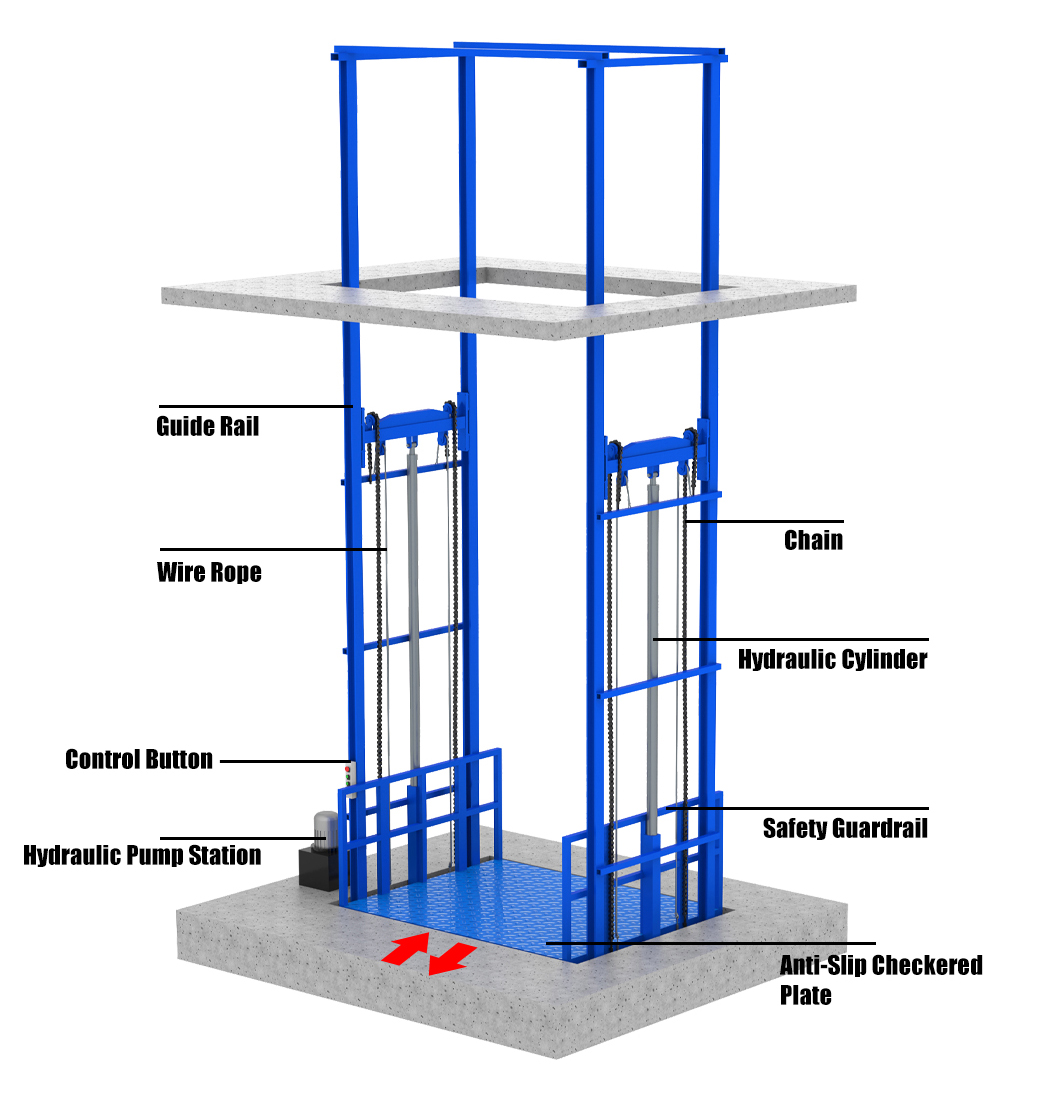
In modern industrial and commercial environments, the need for efficient vertical transportation of goods is increasing rapidly. Warehouses, factories, logistics centers, and even retail spaces often require moving heavy or bulky loads between multiple floors. Traditional freight elevators can be costly and require extensive construction, while forklifts and manual handling present limitations in safety and efficiency. This is where the Guide Rail Cargo Lift, also known as a guide rail freight elevator or hydraulic cargo lift, becomes a reliable and cost-effective solution.
What is a Guide Rail Cargo Lift?
A guide rail cargo lift is a type of vertical material handling equipment designed specifically for transporting goods between floors. Unlike passenger elevators, it is optimized for carrying heavy loads such as pallets, machinery, and raw materials. The lift operates along sturdy guide rails fixed to the building structure, ensuring stability and smooth operation. Most guide rail lifts are powered by a hydraulic system, which provides strong lifting capacity, energy efficiency, and high reliability.
These lifts can be customized according to the available space, lifting height, and weight capacity requirements, making them versatile for various industrial and commercial applications.
Key Features of a Guide Rail Cargo Lift
-
Heavy Load Capacity
Guide rail cargo lifts are designed to handle loads ranging from 500 kg to over 10,000 kg. This makes them suitable for industries dealing with large-scale goods transportation, including manufacturing, warehousing, and logistics. -
Flexible Installation
Unlike conventional freight elevators, guide rail lifts do not require a deep pit or machine room. They can be installed in narrow spaces, both indoors and outdoors, making them adaptable to different building structures. -
Stable and Safe Operation
Equipped with precision guide rails, the lift maintains smooth vertical movement even under heavy loads. Safety features such as overload protection, emergency stop, safety interlocks, and anti-fall devices ensure safe operation for workers and goods. -
Cost-Effective
The installation and maintenance costs of a guide rail cargo lift are significantly lower than traditional freight elevators. Since it does not require complex civil construction, businesses save on both time and expense. -
Customizable Design
Platform size, lifting height, door configurations, and load capacity can all be tailored to meet the specific needs of each customer. This flexibility makes the guide rail lift a practical choice for diverse industries.
Advantages Over Other Lifting Solutions
-
Compared to forklifts: A guide rail cargo lift eliminates the need for constant operator involvement and reduces risks associated with manual handling.
-
Compared to traditional freight elevators: It is easier to install, requires less structural modification, and is more affordable.
-
Compared to scissor lifts: Guide rail lifts provide greater lifting heights and higher load capacities with enhanced stability.
Applications of Guide Rail Cargo Lifts
Guide rail lifts are widely used in:
-
Warehouses and Distribution Centers – For moving pallets, boxes, and heavy goods between mezzanines or floors.
-
Manufacturing Plants – For transporting raw materials and finished products between different production levels.
-
Retail Stores and Supermarkets – For shifting inventory from storage areas to sales floors.
-
Logistics and Shipping Facilities – For efficient loading and unloading operations.
-
Food and Beverage Industry – For moving bulk ingredients, packaged goods, and equipment safely.
Their adaptability makes them an indispensable tool for businesses that value efficiency and productivity.
Safety Considerations
Safety is a top priority in vertical goods transportation. Guide rail cargo lifts are equipped with several safety mechanisms to protect both operators and cargo:
-
Overload Protection System – Prevents the lift from operating if the load exceeds its capacity.
-
Emergency Lowering Device – Allows safe lowering of the platform during power failure.
-
Safety Interlock Doors – Ensure that the lift operates only when doors are properly closed.
-
Anti-Fall Mechanism – Prevents the platform from dropping suddenly in case of hydraulic failure.
With these features, guide rail lifts comply with international safety standards and minimize workplace accidents.
Maintenance and Service
One of the major benefits of guide rail cargo lifts is their low maintenance requirement. Regular inspection of hydraulic oil, guide rails, and safety systems ensures long service life and reliable performance. Many suppliers also provide after-sales service and technical support, giving businesses peace of mind.
Why Choose a Guide Rail Cargo Lift?
For companies seeking an efficient, affordable, and safe vertical transportation solution, a guide rail cargo lift is a smart investment. It enhances productivity by reducing manual handling, ensures safe transportation of heavy loads, and offers long-term value with low operating costs.
In today’s competitive industrial environment, optimizing logistics and material handling systems is crucial. By installing a guide rail cargo lift, businesses not only improve workflow efficiency but also strengthen workplace safety and operational reliability.