
In modern industrial operations, efficiency and safety in material handling are essential. Among the many lifting solutions available, fixed scissor lifts have become one of the most widely used options in warehouses, factories, loading docks, logistics centers, and production lines. These hydraulic platforms are designed to provide stable vertical lifting for heavy goods, reducing labor intensity and improving productivity. However, with different models, capacities, and configurations on the market, choosing the right fixed scissor lift requires careful planning and evaluation. Below are the critical factors every business should consider.
1. Define the Load Capacity
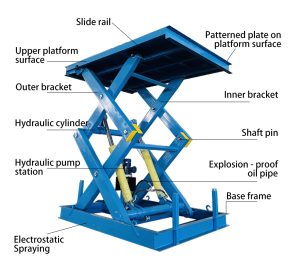
The foremost step in selecting a fixed scissor lift is understanding your load requirements. Scissor lifts are available in various capacities, typically ranging from 500 kg to more than 20 tons. Choosing the correct capacity prevents overloading, extends equipment life, and ensures workplace safety. Businesses should not only consider current daily loads but also account for potential future growth. A slightly higher capacity than the present need often proves beneficial in the long run.
2. Determine the Platform Size
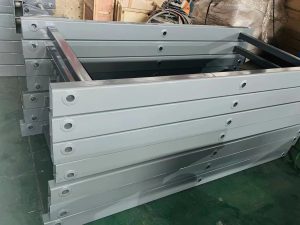
The platform size is equally important. The dimensions of the lift must accommodate the goods, pallets, or machinery that will be transported. For example, in industries where oversized or irregularly shaped materials are common, a larger customized platform may be necessary. Non-slip surfaces, guard rails, and reinforced structures should also be part of the evaluation to enhance operational safety.
3. Lifting Height and Stroke Requirements
Different facilities require varying lifting heights. A fixed scissor lift may only need to bridge a one-meter gap in a loading dock, while another may need to reach several meters for warehouse shelving or production processes. Ensure that the lift stroke matches your exact vertical transport needs. Additionally, smooth lifting and lowering speed should be considered, as this impacts workflow efficiency.
4. Installation Space and Pit Design
Unlike mobile lifts, a fixed scissor lift is anchored at a specific location. It often requires a pit installation to achieve a flush loading surface. Businesses must evaluate available floor space and structural conditions before purchase. In cases where a pit cannot be built, surface-mounted lifts are also an option, though they may require ramps for easier access. Consulting with engineers or manufacturers during the planning phase can prevent costly installation challenges.
5. Drive System and Power Options
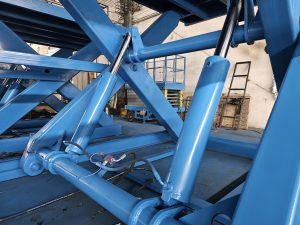
Most fixed scissor lifts use hydraulic systems for lifting, offering strong load-bearing capacity, smooth motion, and reliability. When selecting a lift, it is important to check for high-quality pumps, cylinders, and seals to minimize maintenance issues. Power supply should also be considered—whether single-phase, three-phase, or customized voltage—based on the facility’s infrastructure.
6. Safety Features
Safety is non-negotiable in material handling. A professional fixed scissor lift should come with multiple safety mechanisms, such as:
-
Overload protection devices
-
Emergency stop buttons
-
Safety trip bars to prevent crushing hazards
-
Limit switches to control travel range
-
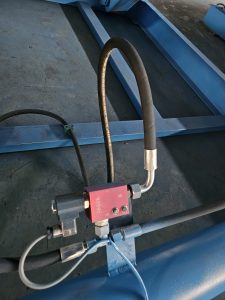
Anti-fall valves in the hydraulic system
These features reduce accident risks, protect workers, and ensure compliance with international safety standards.
7. Frequency of Use and Duty Cycle
Not all scissor lifts are built for the same level of usage. Businesses that operate around the clock should select heavy-duty lifts with durable components, while those with occasional use may opt for lighter models. Evaluating the duty cycle—the lift’s ability to handle frequent operation—helps in avoiding premature wear and unexpected downtime.
8. Manufacturer Reputation and After-Sales Service
A fixed scissor lift is a long-term investment, and the choice of manufacturer is just as important as the equipment itself. Reputable suppliers provide certifications, quality assurance, and reliable customer support. After-sales service, including regular maintenance, availability of spare parts, and quick technical response, can significantly reduce downtime and extend the lifespan of the equipment.
9. Cost Versus Value
While price is always a consideration, businesses should avoid making decisions based solely on initial cost. A lower-priced lift may lack durability, safety features, or after-sales support, leading to higher expenses in the long run. Instead, evaluate the total cost of ownership (TCO) by considering efficiency, energy consumption, maintenance costs, and expected lifespan. The right investment will deliver a better return over time.
10. Customization Options
Every business has unique needs, and many manufacturers offer customized fixed scissor lifts. Customization may include specific platform sizes, lifting speeds, safety configurations, or integration into existing production lines. Discussing these options with the supplier ensures that the equipment aligns perfectly with operational requirements.
Conclusion
Selecting the right fixed scissor lift is a strategic decision that affects efficiency, safety, and profitability. By carefully considering load capacity, platform size, lifting height, installation space, drive systems, safety features, and supplier reliability, businesses can ensure they invest in the most suitable equipment for their needs. A well-chosen scissor lift not only improves workflow efficiency but also reduces labor costs and enhances workplace safety.
In today’s competitive industrial environment, having the right lifting solution is not just about moving goods—it’s about creating long-term value and sustaining growth. With a carefully selected fixed scissor lift, your business can achieve greater productivity and operational excellence.